
video
Screensaver killing X11 with an NVidia GPU
Sat, 03/14/2026 - 15:10 — Alexis WilkeIn the last few months, I have had some problems with my desktop computer. It would enter the screensaver and not get out of the mode easily. I was able to get the screen video back by flipping through the monitor input ports (It has three: HDMI 1, HDMI 2 and DisplayPort).
Until a few days ago when the system decided to install a new version of the NVidia driver: v580.126.09. That first crashed the GPU and the output video was gone. I had to reboot the hard way (sudo init 0 took the system mostly down and then given that it did not turn off the computer, hit the power button for 5 seconds).
What kind of test do I need for my software?
Sun, 04/16/2023 - 11:27 — Alexis Wilke
Introduction
Most software companies run in that dilemma. In order to write software that works, you want to write some tests. The question for many of these companies is: what kind of tests are most efficient for my business?
Here we talk about seven common test practices in the software industry.
1. Unit Testing
Probably the most used form of testing is Unit Testing. This is easy to write and very effective in discovering bugs. If you are looking at verifying correctness, this is 100% what you need to have to test your software.
Why is it easy to write?
In most cases, Unit ...
How small are computers getting?
Wed, 03/18/2020 - 20:37 — Alexis Wilke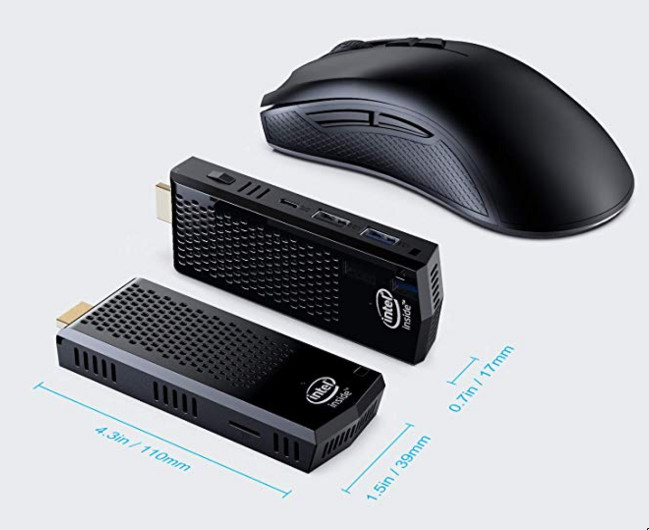
Click on picture to see on Amazon.com (which I'm an affiliate of).
Computer Stick
Looking at Mini Computers, I found this Fanless Mini PC based on the Intel Atom Z8350 processor by SmallRT. The picture includes a mouse to give you an idea of the size of that thing. It's tiny! Maybe not what you want, but you can already do a lot with that little one.
The connector on the left side is an HDMI plug which spits out 4K of video graphics. It's just totally amazing to me. Of course, we had the Pi3 and now we have the Pi4... but those are computers for hackers. Here we're ...
VideoFrame
The VideoFrame tag is used to render one frame. It includes the data of exactly one video frame to be drawn on the screen.
The f_object_id_ref parameter is a reference to a DefineVideoStream.
DefineVideoStream
This tag defines a video stream. To playback the video stream, one needs to add a list of VideoFrame tags.
The f_width and f_height are defined in pixels. This is rather uncommon in SWF so it is to be noted multiple times.
SWF Any Filter (swf_any_filter)
A filter defines how to transform the objects it is attached to. The first byte is the filter type. The data following depend on the type. Because each filter is much different, they are defined in separate structures. You can attach a filter to an object using an ActionScript or the PlaceObject3 tag.
The following describes the different filters available since version 8.
Value Name Version 0 Drop Shadow 8 ...
PlaceObject2
This tag will be used to specify where and how to place an object in the next frame. The PlaceObject is much different and is presented separately.
The f_depth field is used to indicate at which depth the character is inserted in the current frame. There can be only one object per depth value (thus a maximum of 65536 objects can appear on a single frame).
The f_place_has_move and f_place_has_id_ref flags are used to indicate what to do at the given depth. The following table presents what happens depending on the current value.
f_place_has_move ...
SWF Tag (swf_tag, swf_long_tag)
The tag and size are saved in a 16 bits little endian unsigned integer. The tag is always aligned to a byte (not a bit). The size is defined in the lower 6 bits. And the short value is in a little endian format as expected by the declaration. If the size is 63 (0x3F), then another 4 bytes are read for the size. This is used for really large tags such as fonts with many characters, audio, video, or images.
File Header
The file header is found at the very beginning of the file. It should be used to determine whether a file is an SWF file or not. Also, it contains information about the frame size, the speed at which is should be played and the version (determining the tags and actions possibly used in the file).
The f_magic[3] array is defined as the characters: 'FWS' (it is going backward probably because it was supposed to be read in a little endian as a long word). A movie can be compressed when the version is set to 6 or more. In this case, the magic characters are: 'CWS'.
The f_version ...
About SWF
Brief History
At the very beginning, a company created the SWF format to generate small vector animations on the Internet called Shockwave Flash (hence the name of the format, SWF.) It also included images. This company was bought by Macromedia around 1997 (if I recall properly). This is when Flash v3 was created. Since then, Macromedia created a new version about once a year up to version 8. At that time (in 2005/2006), Macromedia sealed a deal with Adobe which wanted to use the SWF format in their PDF files.
Today (May 1st, 2008), the SWF format is available for free to all.
There was ...
